
The defense will take place on mai 19th at 5 PM.
Title
Space Networking: Models and Methods
Where
INSA Lyon Campus, Amphi Chappe

The defense will take place on mai 19th at 5 PM.
Title
Space Networking: Models and Methods
Where
INSA Lyon Campus, Amphi Chappe

Best paper award for Double-Word Decomposition in a Combined FP16, BF16 and FP32 Dot Product Add Operator.
In recognition for an outstanding research paper and presentation.
During 32nd IEEE International Symposium on Computer Arithmectic, May 2025, El Paso, Texas.

Discover the conference-debate “Open Data and Citizen Power: Technical and Political Mediation at the Heart of Data Governance” with Hervé Rivano, member of the Agora project team, and Valentyna Dymytrova, Lecturer in Information and Communication Sciences.
They present open data, its challenges, and its impact on citizen power as part of the “Where is the City Going” series of meetings at the Part-Dieu Library.
More information (in french) : Here

Speaker
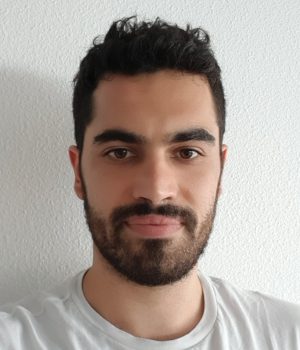
Maud Rio
https://pagesperso.g-scop.grenoble-inp.fr/maudrio/
When / Where
6th February 2025, Amphi Chappe, Heddy Lamarr building INSA Lyon, Villeurbanne
or
https://insa-lyon-fr.zoom.us/j/96963106419?pwd=a2puTTFocTB2R0MwaENNbXAvYlBFQT09
Title
“Comment intégrer les enjeux permacirculaires en recherche et en conception en ingénierie ? ”
Speaker
Samuele Zaboli : https://samuelezoboli.github.io/
When / Where
18th February 2025, “salle vitrine”, Heddy Lamarr building INSA Lyon, Villeurbanne
Title
Control-informed neural policies for multi-agent systems
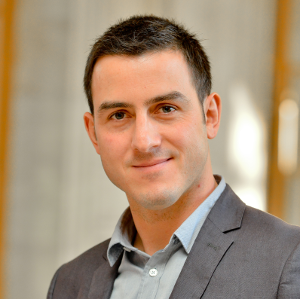
Mathieu Cunche, full professeur at the CITI Laboratory, is cited in two articles from Le Monde :
Données personnelles en vente libre _ les « data brokers », une industrie hors de contrôle
Biography
https://perso.citi-lab.fr/mcunche/index.html

Speaker
Sheng YANG
When / Where
13th February 2025 ; room TD-C ; Heddy Lamarr building INSA Lyon; Villeurbanne
This seminar is open to everyone and is recognized by the EEA doctoral school for doctoral training hours. We will have a sign-in sheet for PhD students who wish to attend the seminar (in person).
visio
https://insa-lyon-fr.zoom.us/j/92678255340<https://insa-lyon-fr.zoom.us/j/92678255340>
Title
From Bayesian Statistics to Large-Scale MIMO Communications
Abstract
Large-scale MIMO systems have emerged as a cornerstone for next-generation wireless communication networks. While extended research has been conducted on signal processing and transceiver design in these systems, the fundamental Shannon capacity limit remains elusive in many settings, particularly in the presence of system non-linearities. In this talk, we explore the connection between statistics and communication, and introduce a novel approach that leverages information-theoretic asymptotics from Bayesian statistics to derive the Shannon capacity of such systems. We reveal the critical role of the Fisher information and Jeffreys’ prior in this characterization, and
demonstrate how to apply this method to derive the asymptotic capacity of various channel models. Examples include the MIMO channels with 1-bit ADC, clipping, phase noise, and imperfect channel state information.
Biography
Sheng Yang received the B.E. degree in electrical engineering from Jiaotong University, Shanghai, China, in 2001, and both the engineer degree and the M.Sc. degree in electrical engineering from Telecom ParisTech, Paris, France, in 2004, respectively. In 2007, he obtained his Ph.D. from Université de Pierre et Marie Curie (Paris VI).
From October 2007 to November 2008, he was with Motorola Research Center in Gif-sur-Yvette, France, as a senior staff research engineer.
Since December 2008, he has joined CentraleSupélec, Paris-Saclay University, where he is currently a full professor. From April 2015, he also holds an honorary associate professorship in the department of electrical and electronic engineering of the University of Hong Kong (HKU).
He received the 2015 IEEE ComSoc Young Researcher Award for the Europe, Middle East, and Africa Region (EMEA). He was an associate editor of the IEEE transactions on wireless communications from 2015 to 2020.
He is currently an associate editor of the IEEE transactions on information theory.
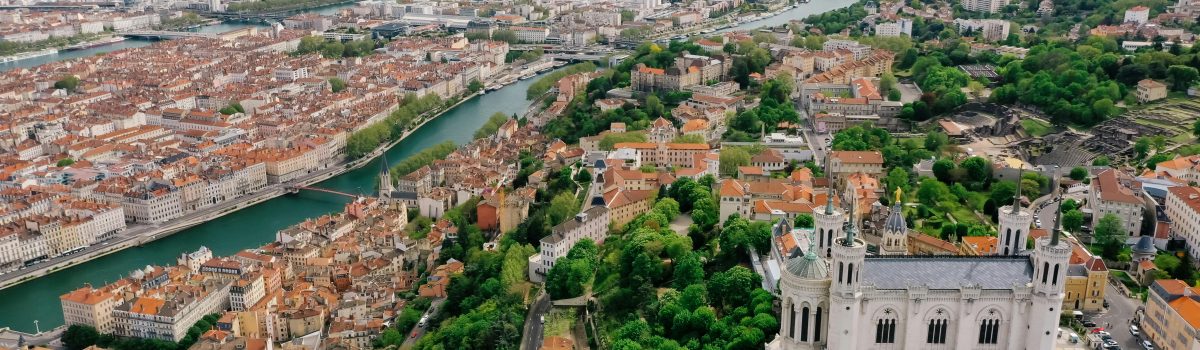
The Emeraude team of the CITI laboratory are organizing the 2025 “Journées de l’Informatique Musicale” (JIM) and Linux Audio Conference (LAC) jointly on June 23-28, 2025 in Lyon : https://jimlac25.inria.fr/
– https://jimlac25.inria.fr/lac/#call-for-papers-presentations-demos-workshops
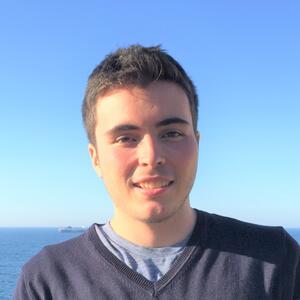
The defense will take place on wednesday 5th february at 2 PM in the Heidi Lamarr building (Amphi Chappe), Insa-Lyon, Villeurbanne.
Title
Seamless Continuous Integration / Continuous Delivery (CI/CD) for Software Defined Vehicles
Abstract
Driven by the rapid increase in the number of Electronic Control Units (ECUs), current automotive software systems face growing complexity while advancements in software architecture are well behind. This imbalance has resulted in higher system complexity, important financial costs, and significant challenges in maintaining and deploying new services in vehicles. The thesis explores the potential of adopting Continuous Integration/Continuous Delivery (CI/CD) pipelines for software-defined vehicles, focusing on several critical aspects: secure software deployment, adaptability of in-vehicle software, and optimization of performance using edge computing.
The contributions of the thesis are manifold: (1) A comprehensive taxonomy of key findings related to the transformation of automotive ICT systems, (2) A proposal for a blockchain-based multi-automaker software store to manage updates and dependencies, (3) The development of a virtualization framework for multi-microcontroller systems and an evaluation of these OS-level virtualization solutions for in-vehicle systems, (4) A software orchestration framework that prioritizes criticality and optimizes resource allocation in heterogeneous environments, and finally (5) A consensus algorithm to efficiently offload functions to edge-computing IoT nodes, optimizing resource use in automotive cloud-edge systems.
By addressing these issues, the thesis contributes to the future of automotive ICT systems, proposing innovative methods that strike a balance between flexibility and performance in managing software complexity within the evolving landscape of connected, autonomous vehicles.
Jury